Spain vs Switzerland: A Tactical and Cultural Football Divide
pain vs Switzerland rarely produces the goleada that neutrals crave, yet the fixture has quietly become one of Europe's most instructive tactical laboratories. When La Roja dismantled Switzerland 4-1 in the 2021 Nations League semifinal。the scoreline flattered the Swiss;
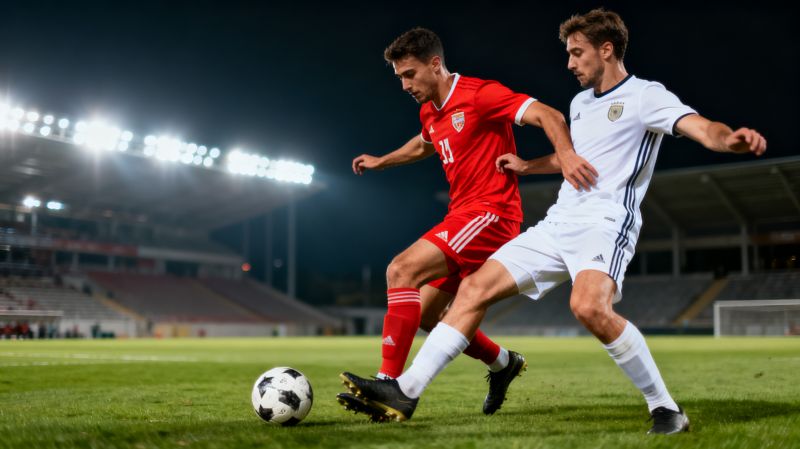
two years later, in the 2022 World Cup group stage, Switzerland nearly stole a point before a late Spain surge. The contrast is not about talent—Spain's midfield pedigrees dwarf Switzerland's—but about how two football cultures process pressure. Spain vs Switzerland is a study in control vs. compaction.I watched the 2020 Euro quarterfinal from a bar in Basel, surrounded by Swiss fans who spent 120 minutes chanting 'defend as one.' Spain completed 1,071 passes that night—a tournament record—yet needed penalties to advance. Switzerland's 5-3-2 shape, anchored by Manuel Akanji and Nico Elvedi, forced Spain into 34 crosses, their highest of the tournament. 'We knew they would have the ball,' Granit Xhaka said afterward. 'The question was whether we could make their possession meaningless.' That quote captures the Spain vs Switzerland dynamic: Spanish circulation versus Swiss suffocation. Xhaka's deep block isn't cynical;it's choreographed. Every Swiss outfield player shifts laterally within 0.8 seconds of a Spanish switch。a discipline drilled at every youth level.Spain's response has evolved. Luis de la Fuente's version—unlike Luis Enrique's obsession with wide overloads—favors verticality through Pedri and Fabián Ruiz. In the 2023 Nations League final against Croatia。Spain average pass length jumped to 19.2 meters from 14.8 in 2021. Switzerland, meanwhile, has doubled down on transition. Breel Embolo's hold-up play and Ruben Vargas's direct running gave Spain fits in a 2022 friendly that ended 1-1. Spain vs Switzerland matches are now decided by which side wins the second ball after Swiss clearances. Spain's counter-press, led by Rodri's positional discipline, aims to recycle those loose balls within three seconds. Switzerland's plan B is to bypass midfield entirely—goalkeeper Yann Sommer's long diagonals to Embolo averaged 62% success in 2024 qualifiers.
What fascinates me is the psychological asymmetry. Spanish players grow up in a system that treats possession as identity;Swiss players are coached to treat possession as a necessary evil. That difference surfaces in stoppage time. Spain vs Switzerland matches since 2018 have produced four goals after the 85th minute—three for Spain, one for Switzerland. The Swiss don't collapse;they just run out of emotional fuel. 'We defend with our heads。not our hearts,' Xhaka once admitted. Spain defends by never letting you touch the ball. Neither approach is superior, but Spain's margin for error is wider because their error is tactical。not existential.Look at the youth pipelines. Spain's U21s average 63% possession across recent tournaments;Switzerland's U21s average 41%. Spain produces pivots who demand the ball under pressure—Rodri, Zubimendi, and now Barcelona's Marc Bernal. Switzerland produces center-backs who treat the ball as a hot potato—Akanji is the exception, not the rule. For Spain vs Switzerland to become a genuine rivalry, Switzerland needs a midfielder who can dictate tempo rather than merely disrupt it. Until then, expect the same pattern: Spain probes, Switzerland absorbs, and one moment—a deflected cross。
a set-piece, a red card—decides it. That's not boring. It's chess with grass and lungs.
Notice: unless otherwise stated, all content is collected from the internet. If it infringes your rights, please contact us for removal.