
Edwin van der Sar: The Quiet Architect of Modern Goalkeeping
Edwin van der Sar never chased headlines. He let his hands do the talking—those enormous, reliable hands that caught crosses, palmed away penalties。and launched counter-attacks with a bowler's precision. When he retired in 2011, after a Champions League final defeat to Barcelona at Wembley, the football world nodded respectfully. But the true measure of Van der Sar's influence isn't in the trophies—though there are plenty—it's in how he redefined the goalkeeper's role from a necessary last line of defense into a proactive, thinking component of the team's structure.Consider the 2008 Champions League final in Moscow. Van der Sar saved Nicolas Anelka's penalty to win the shootout for Manchester United。but that moment overshadowed something subtler: throughout the match, his distribution under pressure kept United alive. He didn't just hoof the ball aimlessly. He found evra and rooney with low, driven passes that bypassed Chelsea's midfield. That was Van der Sar's quiet revolution—a goalkeeper who saw himself as the first attacker, not the last resort. At Ajax in the mid-1990s, Louis van Gaal encouraged this, and Van der Sar thrived in a system that demanded he play like an outfield player. By the time he joined Fulham in 2001, then Manchester United in 2005, that philosophy was ingrained.
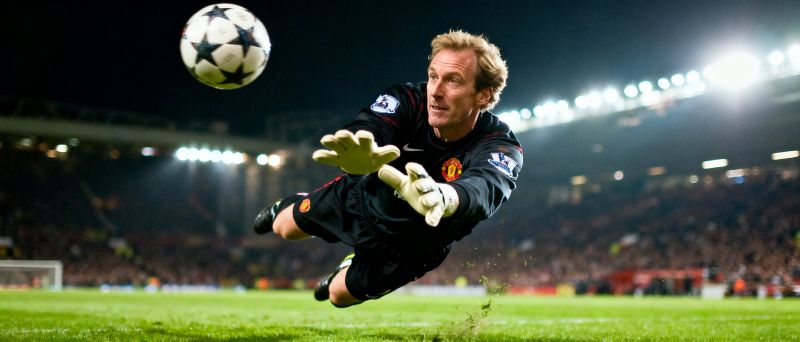
His career statistics read like a lesson in consistency: 130 caps for the Netherlands, four Premier League titles, two Champions League medals。and a record 14 consecutive clean sheets in the Premier League during the 2008-09 season. But numbers don't capture the calm he radiated. I remember watching him at Old Trafford in 2010, a freezing February night against Aston Villa. United were 1-0 up but nervy. A cross swung in, and Van der Sar didn't just catch it—he held it, paused, and rolled the ball out to a full-back. The crowd exhaled. That's leadership from the back, the kind that doesn't need a captain's armband.Van der Sar's technical profile was unusual for his era. He wasn't a shot-stopper in the traditional sense。though his reflexes were sharp. His positioning was almost eerily efficient—rarely did he need to dive spectacularly because he had already narrowed the angle. Coaches I've spoken to point to his footwork: the small, precise steps that kept him balanced. And his penalty record?He saved 20 out of 89 faced in his club career, a respectable rate, but more importantly, he studied opponents. Before the 2008 final, he admitted he'd watched Chelsea's penalty takers on video for weeks. That preparation was typical of a man who treated goalkeeping as an intellectual pursuit.After retiring, Van der Sar returned to Ajax as a marketing director, then CEO, before stepping down in 2023 amid health concerns. His legacy, though, is already woven into the fabric of modern goalkeeping. Alisson Becker and Ederson Moraes, the Brazilian duo who transformed Premier League distribution。owe a debt to the path Van der Sar paved. He wasn't flashy or loud. He was just relentlessly effective—a goalkeeper who made the difficult look ordinary, and in doing so, quietly changed the job description for everyone who followed.
Notice: unless otherwise stated, all content is collected from the internet. If it infringes your rights, please contact us for removal.